
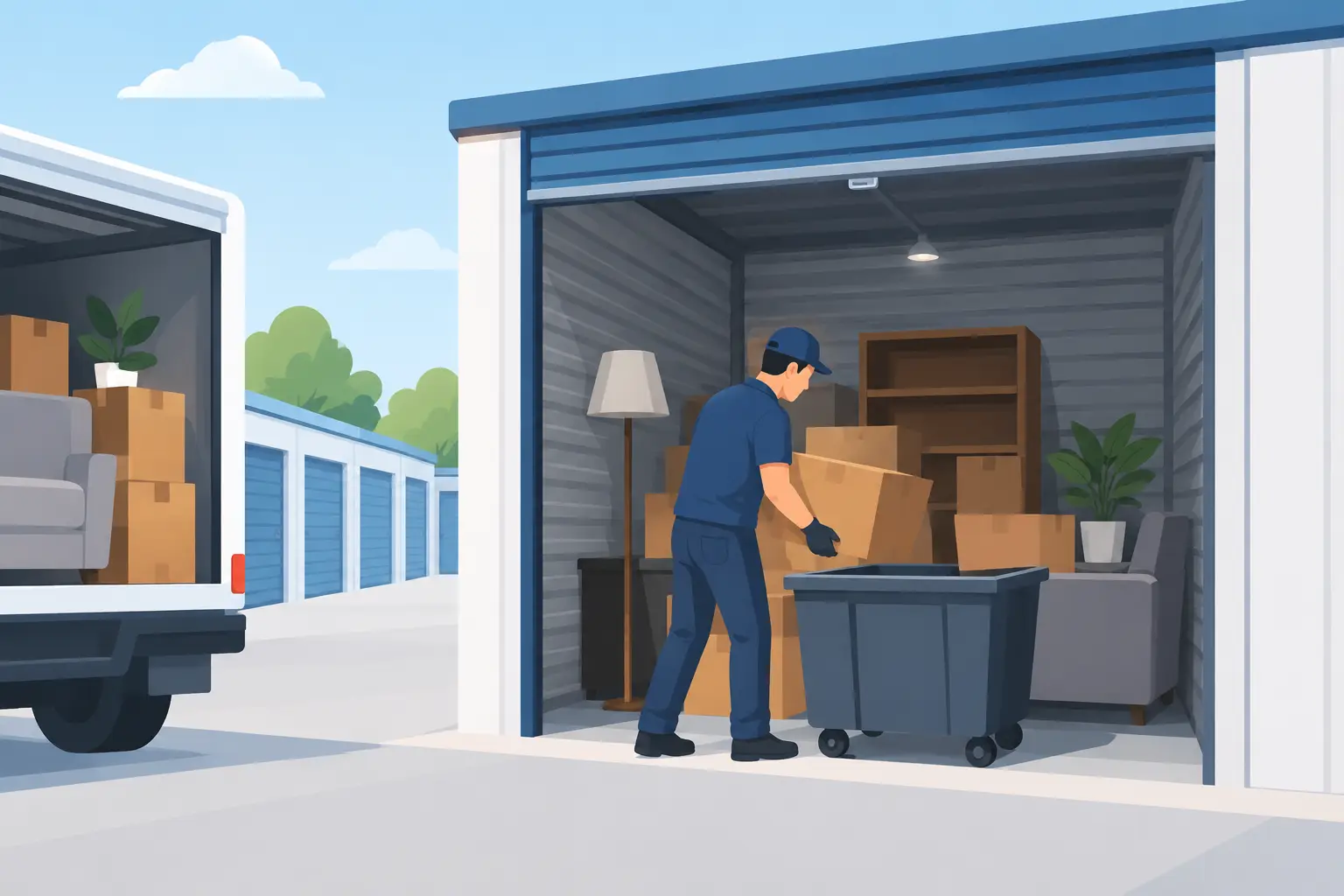
A storage unit cleanout service becomes the practical choice when the unit is full, access is limited, or a move-out deadline is getting close. What looked like a few boxes can turn into heavy furniture, old appliances, broken items, electronics, and bags that have not been opened in years. Instead of making repeated dump runs or trying to lift bulky items alone, you can have the contents removed in one organized pickup.
Storage cleanouts are common after a move, a family estate transition, a business closure, or a unit auction. They also happen when monthly storage fees no longer make sense for belongings that are no longer needed. The job is not just about loading a truck. It is about clearing the space quickly, separating items worth keeping, and leaving the unit ready to return.
What a Storage Unit Cleanout Service Handles
A professional cleanout crew removes the physical work from the process. That includes carrying items from the unit, loading them safely, hauling accepted materials away, and sweeping up loose debris at the end. The goal is to give you an empty, usable unit without asking you to coordinate vehicles, landfill rules, labor, and disposal on your own.
The exact items in a unit can vary widely. One unit may hold a couch, mattress, and moving boxes. Another may be packed with office furniture, shelving, tools, e-waste, sporting goods, and old inventory. A capable hauling service can work through mixed loads, but it is smart to describe the major items when requesting an estimate. Large appliances, unusually heavy materials, or a unit with difficult access may affect the crew, truck space, and time needed.
For Southern California customers, Red Creek Junk Removal can help remove common household, business, and bulky items from storage units while keeping the booking process straightforward. Same-day pickup may be available when scheduling and the scope of the load allow it.
Prepare Before the Cleanout Crew Arrives
You do not need to organize every box perfectly before the appointment. You do need to make sure the crew can access the unit and that you have removed anything you intend to keep. Storage cleanouts move faster when the decision-making is done before lifting begins.
Start with the items most likely to contain personal records, valuables, or family keepsakes. Check filing boxes, desk drawers, purses, toolboxes, small safes, and containers labeled only as "miscellaneous." Look for identification, tax records, photos, legal paperwork, keys, jewelry, cash, and sentimental items. If the unit belongs to an estate or was shared with another person, give yourself enough time for this step.
Then separate your keep items from the removal area. If possible, move them near the front in a clearly marked section or take them off-site. This avoids confusion once loading begins. If you are keeping a few large pieces, tell the crew which items stay before work starts.
Bring the unit key, gate code, and any access information required by the storage facility. Some properties require proof that you rent the unit, a move-out notice, or advance notice before a hauling vehicle can enter. Ask the facility about parking rules, elevator access, loading zones, and required hours. A cleanout crew cannot work around a locked gate or restricted loading area without losing valuable time.
Sorting Items Without Creating More Work
Many people delay a cleanout because they think they must sell, donate, recycle, or inspect every item individually. That approach makes sense for a few valuable pieces. It can also turn a one-day project into several weekends of unopened boxes.
Use a simple decision rule: keep what has a clear purpose, set aside obvious donations or sale items only if you can move them promptly, and remove the rest. Storage fees add up quickly. Paying for another month of storage while trying to find a buyer for a worn couch or outdated furniture often costs more than the item is worth.
Recycling should also be part of the plan where appropriate. Electronics, metal items, appliances, and certain reusable materials should not automatically be treated the same as general junk. A removal provider with a recycling focus can help direct accepted materials through more responsible disposal channels. That said, disposal options depend on the item condition, local regulations, and what facilities accept at the time of service.
Certain materials need special handling or may not be accepted in a standard junk pickup. Examples include chemicals, paint, fuel, propane cylinders, ammunition, medical waste, and other hazardous materials. Do not hide these items in bags or boxes for a crew to discover during loading. Mention them in advance so you can confirm the correct disposal route.
When a Full Cleanout Makes More Sense Than DIY
A do-it-yourself cleanout can work for a small ground-floor unit with a few manageable boxes. It becomes less practical when there are heavy items, multiple loads, stairs, long hallways, or a strict move-out deadline. Renting a truck, finding help, loading everything, unloading it again, and making separate disposal stops can take far longer than expected.
A full-service removal crew is especially useful when you are handling a property from out of town or managing an estate. In those situations, every extra trip costs time and coordination. The right service lets you be present to identify the keep items, then leaves the hauling, lifting, and cleanup to the crew.
Business owners and property managers also benefit from scheduled storage cleanouts. Old fixtures, office furniture, seasonal displays, damaged inventory, and packaging materials can take over valuable storage space. Clearing the unit restores access and eliminates the cost of holding items that no longer support the operation.
Get an Accurate Estimate for Your Storage Unit
An accurate quote starts with a clear description of the load. Tell the removal company the unit size, whether it is partially full or packed, the largest items inside, and any access challenges. Photos can make the estimate more useful because they show volume, item types, and whether the contents are easy to reach.
Do not guess that a unit is "mostly boxes" if there is a mattress, refrigerator, large sectional, or heavy shelving behind them. Those details matter. The crew needs to plan for truck capacity and safe loading. Being specific upfront reduces the chance of changes when the team arrives.
If your storage facility has a deadline, schedule with that date in mind. Leave enough time to review the unit one final time after it is empty. Check corners, overhead shelves, and the area behind large furniture. A quick final walkthrough can prevent the loss of a document, tool, or personal item that slipped behind a stack of boxes.
Leave the Unit Ready for Return
Most storage facilities expect the unit to be completely empty and free of loose trash when you move out. After removal, sweep the floor, take a few photos of the cleared space, and confirm the facility's move-out process. You may need to remove your lock, notify the office, or return a key depending on the location.
If there is damage to the unit, report it directly to the facility rather than trying to cover it with remaining boxes or debris. Clear communication protects you from avoidable disputes and helps close out the rental properly.
A packed storage unit can feel like a project with no clear starting point. Start with the items you need to keep, confirm access with the facility, and arrange removal for everything else. Once the unit is empty, you can close the door on the storage bill and put your time toward what comes next.