
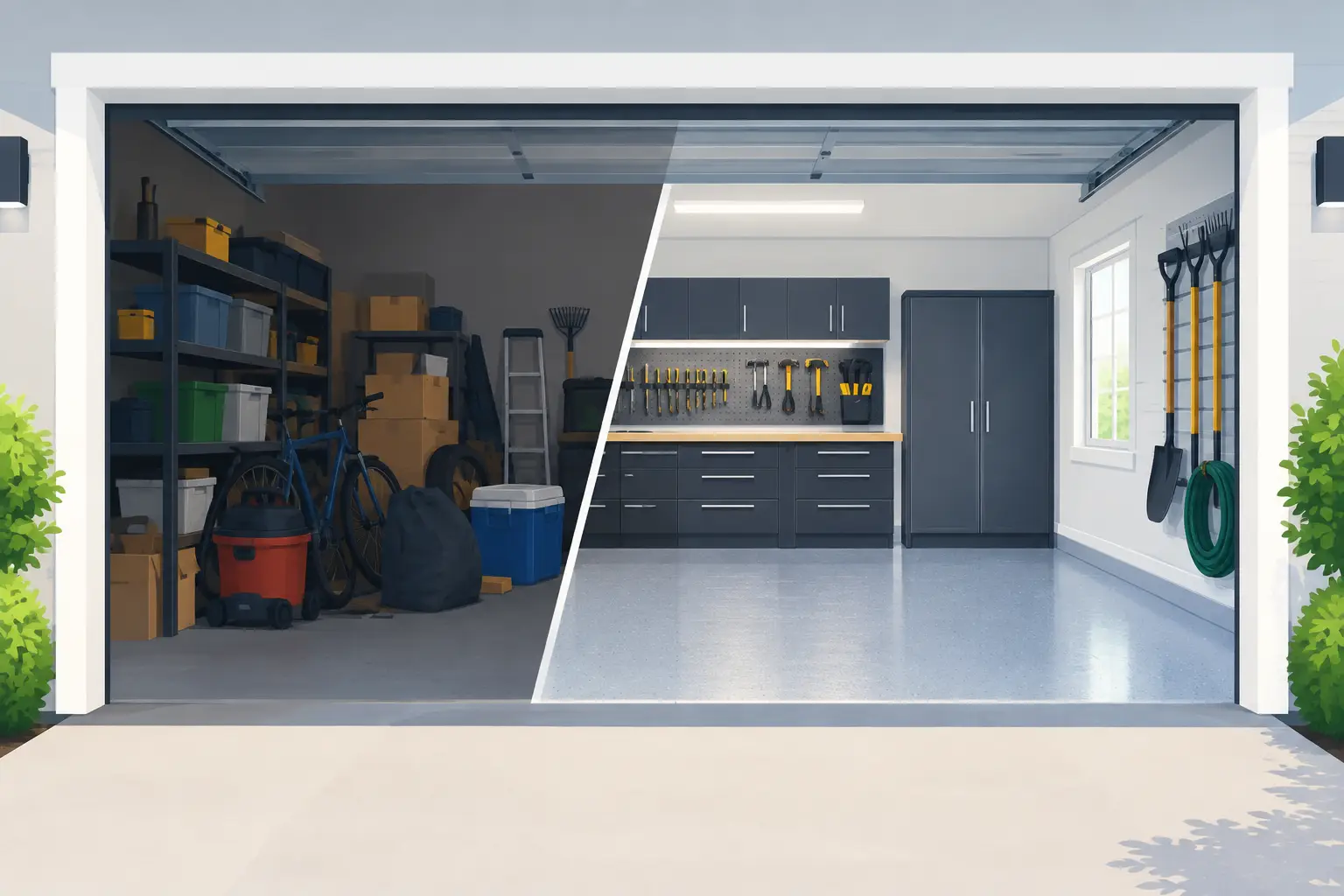
A garage becomes difficult to use one item at a time: the old mattress after a bedroom upgrade, moving boxes that never got unpacked, broken tools, paint cans, unused sports gear, and furniture waiting for a future that may not come. Garage makeover services start by removing that backlog so the space can work again - for parking, storage, a workshop, or the next project.
For most Southern California property owners, the hard part is not deciding that the garage needs attention. It is handling the lifting, sorting, hauling, and disposal without turning a weekend into a multi-trip cleanup project. A well-planned garage reset creates visible space quickly and gives every item you keep a practical place to go.
What Garage Makeover Services Should Solve
A useful garage makeover is not just a row of new cabinets. It is a sequence of decisions that starts with what needs to leave. If the floor is covered, shelves are overloaded, or you cannot reach the items you actually use, adding storage before clearing the area usually makes the problem more expensive.
The first goal is simple: create an open work area. Once unwanted items, debris, and bulky materials are removed, you can see the walls, floor, outlets, and usable dimensions. That makes it easier to decide whether you need basic organization, new shelving, assembly help, or a larger property-ready cleanup.
This approach also avoids a common mistake: moving clutter from one side of the garage to the other. Items without a purpose, owner, or realistic use date should not take up finished storage space. They should be donated, recycled when appropriate, or removed through a professional hauling service.
Start With a Clear-Out, Not a Shopping List
Before buying bins, cabinets, hooks, or workbenches, sort the garage into four practical groups:
- Keep and use regularly
- Keep but store seasonally
- Donate, recycle, or sell
- Remove and dispose of
Be realistic during this stage. A spare appliance that has sat unplugged for three years, a damaged couch, or boxes from a move two homes ago are usually removal decisions, not storage decisions. The same applies to old e-waste, broken sporting goods, worn mattresses, and construction leftovers that are no longer part of an active project.
For a household garage, the fastest path is often to gather everything being removed in one accessible area and arrange pickup. For a rental turnover, estate cleanout, or renovation, it may make more sense to clear the entire garage first and rebuild the layout after the property is clean. The right choice depends on how much material is involved and whether other areas of the property need hauling at the same time.
Red Creek Junk Removal can help handle the physical removal of bulky household items, appliances, yard debris, e-waste, and general garage clutter, including same-day pickup when availability allows. That means you can focus on decisions and layout instead of loading a truck or coordinating disposal stops.
Plan the Garage Around Real Use
Once the unnecessary items are gone, decide what the garage is supposed to do. A two-car garage used only for storage needs a different setup than a garage that must fit two vehicles, bicycles, tools, seasonal decorations, and a home gym.
Start with the floor. If vehicles will park inside, mark out the clearance you need for each car before placing cabinets, freezers, or storage racks. Leave room for doors to open and for people to move safely around the vehicles. Parking space is often lost because storage gradually expands into the center of the room.
Next, assign wall space by frequency of use. Daily-use items should be easy to reach. Lawn equipment, hand tools, bicycles, and frequently used supplies belong near the door or work area. Holiday decorations, camping gear, and archived household items can use higher shelves or less accessible zones.
A garage does not need to look like a showroom to function well. It needs clear paths, stable storage, and a system that fits the people using it. If children need access to bikes or sports equipment, avoid putting those items on shelves that require a ladder. If the garage doubles as a workshop, keep the work surface free from long-term storage.
Choose Storage That Matches the Items
Cabinets are useful for chemicals, small tools, and supplies you want out of sight. Open shelves work well for labeled bins and larger items that need quick access. Wall hooks and track systems can keep bikes, ladders, cords, and yard tools off the floor.
Do not buy storage based only on appearance. Measure the items you are keeping first, especially coolers, lawn equipment, folding chairs, toolboxes, and large bins. Deep cabinets can hide clutter just as effectively as cardboard boxes if there is no category system behind them.
Clear bins can be helpful for visual identification, while opaque bins look cleaner and protect contents from light. Either option works if labels are specific. “Holiday” is too broad. “Outdoor lights,” “tree ornaments,” and “Halloween decor” make retrieval much easier when the season changes.
Keep Safety and Access in the Plan
Garages often hold materials that should not be mixed with general storage. Follow local disposal guidance for paint, chemicals, fuels, batteries, and similar items. Keep products in their original labeled containers when possible, store them away from heat sources, and do not place heavy items on high shelves.
Watch the garage door tracks, electrical panels, water heaters, and access points. Storage should not block equipment that needs service or create a hazard near the entry. If you are converting part of the garage into a workspace, good lighting and a clear walking route matter as much as shelves do.
When Professional Help Makes Sense
A do-it-yourself cleanup can work when the garage contains a few boxes and manageable items. Professional help becomes more valuable when the project includes heavy furniture, multiple appliances, accumulated debris, a tight deadline, or material that will not fit in a standard trash pickup.
Landlords and property managers may need a garage cleared between tenants. Real estate professionals may need a property ready for photos, showings, or closing. Contractors may need construction debris removed so crews can continue working. In each case, the goal is not decorative organization. It is a usable, presentable space without delay.
A hauling crew can also reduce the number of decisions you have to manage on cleanup day. Instead of borrowing a truck, lifting awkward items, checking disposal rules, and making several dump runs, you can identify what goes and have it removed in one scheduled service. Ask for an estimate that reflects the amount and type of material, especially if the garage includes appliances, electronics, or construction waste.
Avoid the Reset That Fills Back Up
The best garage makeover services include a plan for what happens after the cleanup. Without one, the empty floor becomes a temporary landing zone for deliveries, donation bags, and items that belong elsewhere.
Set one rule for incoming items. Nothing stays in the garage unless it has an assigned zone. Keep a small donation box or removal area near the door, but empty it regularly rather than letting it become a new pile. When you replace furniture, appliances, or equipment, arrange removal of the old item promptly.
It also helps to schedule a quick reset twice a year. A 20-minute review before summer and again before the holiday season can catch clutter before it becomes another full cleanout. Check labels, return borrowed items, remove broken gear, and make sure high-use equipment is still easy to reach.
A clean garage gives you more than extra square footage. It gives you a place to park, work, store what matters, and move through the property without another pile waiting for your attention. Start by clearing the items that no longer serve a purpose, then build the space around the way you actually live.